
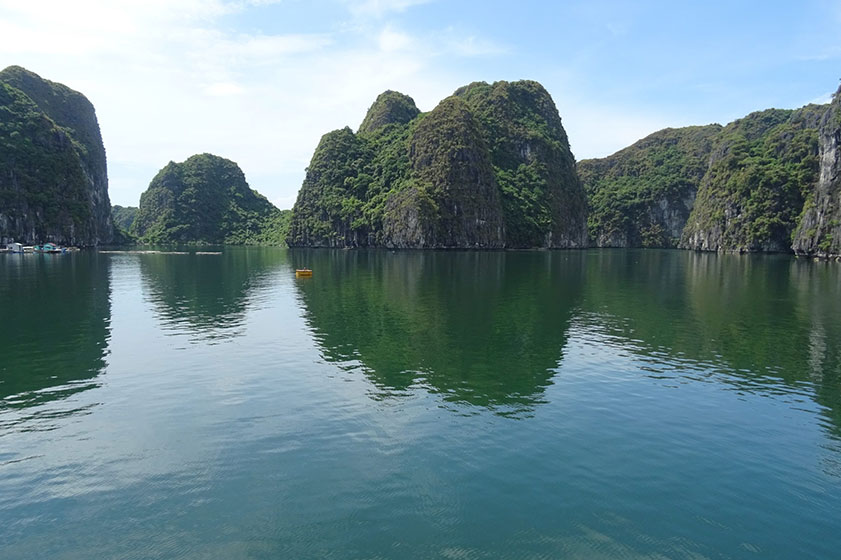
A Photographer’s Guide to Halong Bay and Lan Ha Bay
Few destinations in Vietnam offer the visual diversity of Halong Bay and Lan Ha Bay. Towering limestone karsts rise dramatically from emerald-green waters, hidden lagoons reveal themselves between rocky cliffs, and traditional fishing boats add a sense of scale and culture to the landscape.
For photographers, these bays are more than beautiful destinations. They are constantly changing compositions shaped by sunlight, weather, mist, reflections, and movement.
A cruise is one of the best ways to experience this scenery because it allows travelers to photograph the landscape from multiple perspectives. With lejourney elegance cruise, travelers can combine comfortable cruising with opportunities to capture sunrise, limestone islands, secluded waterways, caves, and peaceful moments on the bay.
Whether you use a professional camera, mirrorless system, action camera, or smartphone, this guide will help you discover the best photography opportunities in Halong Bay and Lan Ha Bay.
Why Halong Bay and Lan Ha Bay Are Perfect for Photography
The unique geology of the region creates endless opportunities for landscape photography.
Instead of one continuous mountain range, the bays are characterized by hundreds of limestone formations emerging from the sea. Their different shapes, heights, and distances create natural layers within a photograph.
The combination of:
- Limestone karsts
- Calm emerald water
- Morning mist
- Dramatic clouds
- Traditional boats
- Floating villages
- Hidden lagoons
- Sea caves
- Forest-covered islands
- Golden-hour sunlight
makes almost every section of the journey photographically interesting.
One of the biggest advantages of photographing the bays from a cruise is movement. As the boat changes position, the relationship between the foreground islands and distant karsts also changes. A scene that looks ordinary from one angle can become an impressive composition only a few minutes later.
The Best Time for Photography in Halong Bay and Lan Ha Bay
Light is one of the most important factors in travel photography. In Halong Bay and Lan Ha Bay, early morning and late afternoon generally provide the most atmospheric conditions.
Sunrise: The Most Magical Moment
Sunrise is one of the best times to photograph the bays.
During the early morning, the water can be remarkably calm, creating reflections beneath the limestone formations. Soft light gradually illuminates the cliffs while mist may remain between the islands.
For photographers, this creates a softer and more atmospheric image than shooting under strong midday sunlight.
Try capturing:
- Limestone silhouettes
- Reflections on the water
- Boats moving through the mist
- Sunlight behind karsts
- Quiet decks before the bay becomes active
- Wide panoramic landscapes
If you are staying aboard lejourney elegance cruise, consider preparing your camera before sunrise so you can immediately capture the changing light.
Golden Hour: When Limestone Karsts Come Alive
Golden hour is another excellent period for photography.
As the sun becomes lower, warm light can create highlights and shadows across the limestone formations. Instead of photographing the entire landscape with flat lighting, look for individual islands illuminated against darker backgrounds.
A telephoto lens can be particularly useful here.
Rather than always shooting wide landscapes, zoom in on:
- Rock formations
- Trees growing on cliffs
- Boats between islands
- Small fishing vessels
- Layers of distant karsts
These details can create more intimate photographs and help tell a deeper story about the landscape.
The Best Photography Viewpoints from a Cruise
One of the greatest advantages of exploring Halong Bay and Lan Ha Bay by cruise is that you do not have to rely on a single viewpoint.
The changing position of the vessel constantly creates new compositions.
1. The Upper Deck
The upper deck is one of the best places for panoramic photography.
From an elevated position, you can capture the relationship between the cruise ship, limestone islands, and surrounding sea.
Try photographing early in the morning when the water is calm and the light is soft.
A wide-angle lens works well for large landscapes, while a standard zoom lens gives you more flexibility.
2. The Front of the Cruise
The bow can provide a powerful perspective as the vessel moves through the bay.
Use the direction of the boat to create leading lines toward distant islands. The movement of the vessel can also add depth to the composition.
For a more dynamic photograph, include part of the deck in the foreground.
This creates a sense of place and makes the viewer feel as if they are traveling through the landscape with you.
3. The Water Level: Kayaking Photography
Some of the most interesting photographs are captured from water level.
Kayaking allows travelers to move closer to limestone cliffs, caves, and hidden lagoons. The lower perspective makes the rock formations appear larger and more dramatic.
It also provides opportunities for photographs that are difficult to capture from a cruise ship.
Consider photographing:
- Kayaks beneath towering cliffs
- Reflections in calm lagoons
- Cave entrances
- Narrow waterways
- Small beaches
- Forest-covered islands
When photographing from a kayak, a waterproof camera bag or protective cover is highly recommended.
Hidden Lagoons: Photographing the Landscapes Beyond the Main Routes
One of the most rewarding experiences in Lan Ha Bay is discovering quieter landscapes away from the busiest areas.
Hidden lagoons can feel completely different from the open sea. Surrounded by limestone cliffs, the water is often calmer and the environment more enclosed.
These locations are perfect for minimalist compositions.
Instead of filling the frame with multiple islands, try placing a single kayak or boat against the limestone background.
This technique creates a stronger sense of scale and emphasizes the immense size of the surrounding cliffs.
Photographing the Caves of Halong Bay and Lan Ha Bay
The caves of the region offer a completely different photography environment.
Inside a cave, natural light can be limited, while the contrast between dark rock formations and illuminated entrances can be dramatic.
Rather than trying to brighten the entire scene, use the contrast creatively.
A person, kayak, or small boat near the entrance can become a natural scale reference.
For handheld photography:
- Keep your ISO as low as practical.
- Use image stabilization if available.
- Hold the camera securely.
- Avoid using an excessively slow shutter speed when people are moving.
- Consider a tripod only where conditions and cruise activities allow it.
Always follow local rules and avoid disturbing the environment while photographing inside caves.
Fishing Boats and Local Life: Adding a Human Element
Landscape photography becomes more meaningful when it includes people.
Traditional boats, fishermen, floating structures, and everyday activities can add scale and cultural context to photographs of Halong Bay and Lan Ha Bay.
A small boat passing between enormous limestone formations immediately communicates the scale of the landscape.
When photographing local people, remember to be respectful. If you want a close-up portrait, asking for permission is the best approach.
For wider environmental portraits, show the person as part of the landscape rather than isolating them from their surroundings.
How to Photograph Reflections on the Bay
Calm water can create spectacular reflections.
The best opportunities often occur early in the morning when wind conditions are relatively gentle.
To maximize the reflection:
- Look for sheltered areas.
- Keep your camera level.
- Use a polarizing filter carefully.
- Avoid unnecessarily fast shutter speeds.
- Include both the sky and water in the composition.
- Watch for boats that can add movement to an otherwise static scene.
A perfectly symmetrical reflection can be beautiful, but you do not always need symmetry.
Sometimes placing the limestone formation in the upper third of the frame and allowing the water to dominate the foreground creates a more cinematic image.
Weather Can Make Your Photos Better
Many travelers worry about cloudy or misty weather.
Photographers should think differently.
Overcast conditions can actually create some of the most atmospheric photographs in Halong Bay and Lan Ha Bay.
Mist softens distant islands and creates natural layers. Clouds reduce harsh shadows, while light rain can give the landscape a mysterious character.
Instead of waiting for perfect blue skies, look for:
- Moody clouds
- Mist between limestone peaks
- Atmospheric silhouettes
- Soft reflections
- Sunbeams breaking through clouds
- Dramatic changes in weather
Some of the most memorable travel photographs are created when conditions are imperfect.
Smartphone Photography Tips for Halong Bay
You do not need expensive equipment to photograph the bays.
Modern smartphones can produce excellent travel images, especially in good natural light.
For better smartphone photographs:
Clean Your Lens
Saltwater spray and fingerprints can quickly reduce image quality. Clean the lens before important shots.
Use the Wide Lens Carefully
Ultra-wide cameras are useful for dramatic landscapes, but they can make distant limestone formations appear smaller.
Try the Telephoto Lens
Use the telephoto camera to isolate individual karsts, boats, or details on distant cliffs.
Shoot During Sunrise and Golden Hour
Good light matters more than expensive equipment.
Use the Rule of Thirds
Place the horizon, limestone formations, or boats away from the center when a more dynamic composition is appropriate.
Recommended Camera Gear for a Halong Bay Cruise
A lightweight setup is usually better than bringing your entire photography collection.
A practical kit could include:
- Camera: Mirrorless or DSLR
- Wide-angle lens: For landscapes and caves
- Standard zoom: For general travel photography
- Telephoto lens: For distant islands and details
Polarizing filter: For controlling reflections and enhancing skies - Extra batteries: Particularly important for sunrise shoots
- Memory cards: Bring more storage than you think you need
- Dry bag: Useful for kayaking
- Microfiber cloth: Essential around water
If you are traveling primarily for photography, a 24–70mm equivalent lens can be an excellent all-purpose option, complemented by either a wider lens or a telephoto lens depending on your priorities.
Composition Techniques for Better Halong Bay Photos
Beautiful scenery does not automatically create a great photograph.
Composition is what turns scenery into a visual story.
Use Leading Lines
The wake of a cruise ship, a narrow waterway, or a line of boats can guide the viewer toward the main subject.
Create Foreground Interest
Include part of the cruise deck, a kayak, vegetation, or a rock in the foreground to create depth.
Look for Layers
Place a nearby island in the foreground, another formation in the middle distance, and misty karsts in the background.
Use Scale
A person or boat provides a reference point that communicates the enormous size of the landscape.
Try Minimalism
Do not be afraid of empty space.
A single limestone island surrounded by calm water can sometimes be more powerful than a crowded composition.
Halong Bay vs. Lan Ha Bay for Photographers
Both destinations offer exceptional photographic opportunities, but their visual character can feel different.
Halong Bay is famous for iconic limestone formations and dramatic panoramic landscapes. It is ideal for photographers looking for classic images of Vietnam’s karst seascape.
Lan Ha Bay often offers a quieter atmosphere, with numerous islands, secluded waterways, beaches, and opportunities to explore by kayak.
For photographers who want variety, combining both destinations can provide a broader visual story.
Rather than asking which bay is more beautiful, consider what kind of photography you enjoy.
For iconic landscapes, Halong Bay is compelling.
For quieter scenes, kayaking, hidden lagoons, and intimate compositions, Lan Ha Bay can be particularly rewarding.
A Sample Photography Schedule on a Cruise
A cruise itinerary can naturally become a photography itinerary.
Early Morning
Wake before sunrise and prepare your camera.
Photograph:
- Sunrise
- Mist
- Reflections
- Empty decks
- Distant limestone silhouettes
- Morning
After breakfast, photograph the changing landscapes as the cruise moves through the bay.
Use different focal lengths and experiment with compositions.
Midday
Use this time for exploration, kayaking, caves, or cultural activities.
The stronger sunlight can also be useful for high-contrast images.
Afternoon
Look for details that you may have missed earlier:
- Fishing boats
- Limestone textures
- Island vegetation
- Water patterns
- Cruise details
- Sunset
Return to the upper deck for warm light and wide panoramic photographs.
Evening
Do not put your camera away immediately.
The illuminated cruise ships, reflections, dark silhouettes, and night sky can provide opportunities for a completely different visual style.
Night Photography on Halong Bay
When the sun disappears, the landscape changes completely.
The limestone islands become silhouettes, while cruise ships create points of light across the water.
If conditions are suitable, try:
- Long-exposure photographs
- Reflections of cruise lights
- Silhouettes of limestone karsts
- Star photography
- Atmospheric images of the cruise deck
A tripod can be helpful for long exposures, although always consider the movement of the vessel.
For astrophotography, minimize artificial light and check weather conditions before planning a dedicated night shoot.
Responsible Photography in Halong Bay and Lan Ha Bay
Great photography should never come at the expense of the environment.
Halong Bay and Lan Ha Bay are fragile marine landscapes, so photographers should avoid damaging vegetation, disturbing wildlife, or entering restricted areas for a better angle.
When kayaking or visiting caves, follow the instructions of your guide and cruise operator.
Avoid leaving equipment, plastic, or other waste behind.
The goal is simple: capture the beauty of the bay without becoming part of the environmental problem.
Why a Cruise Is Ideal for Photography
Exploring Halong Bay and Lan Ha Bay independently can provide flexibility, but a cruise offers a major advantage for photographers: constant access to changing viewpoints.
Instead of photographing one location and leaving, you can watch the landscape evolve throughout the day.
A cruise such as lejourney elegance cruise can also provide a comfortable base between photography sessions, allowing travelers to focus on the scenery rather than transportation logistics.
From sunrise on the deck to kayaking through hidden waterways and watching the final light disappear behind limestone islands, the journey naturally creates a sequence of photographic stories.
Final Thoughts: Photograph the Journey, Not Just the Destination
The best photographs of Halong Bay and Lan Ha Bay are not always the most dramatic ones.
Sometimes the most memorable image is a small fishing boat disappearing into morning mist.
Sometimes it is the reflection of a limestone island on perfectly calm water.
Sometimes it is a quiet moment on the cruise deck as the sun rises over the horizon.
The key is to slow down, observe the changing light, and be ready when the landscape creates something unexpected.
For travelers combining photography with a comfortable cruise experience, lejourney elegance cruise provides an excellent context for discovering the visual diversity of Halong Bay and Lan Ha Bay.
Bring your camera, wake up early, explore beyond the obvious viewpoints, and let the changing landscape tell the story.
Frequently Asked Questions
What is the best time to photograph Halong Bay?
Early morning around sunrise is one of the best times because the light is soft and the water can be calm. Golden hour in the late afternoon is also excellent for warm light and dramatic limestone formations.
Is Lan Ha Bay good for photography?
Yes. Lan Ha Bay offers limestone islands, secluded waterways, beaches, hidden lagoons, kayaking opportunities, and quieter landscapes that are excellent for travel and landscape photography.
Can I photograph Halong Bay with a smartphone?
Absolutely. A modern smartphone can capture excellent photographs, particularly during sunrise, sunset, and good natural lighting conditions.
What camera lens is best for Halong Bay?
A wide-angle lens is useful for panoramic landscapes, while a standard zoom lens offers greater flexibility. A telephoto lens is valuable for photographing distant limestone formations and boats.
Is kayaking useful for photography?
Yes. Kayaking provides a low, water-level perspective and allows photographers to approach caves, cliffs, lagoons, and smaller waterways that may look very different from a cruise deck.
Is sunrise worth waking up early for?
Definitely. Sunrise can produce some of the most atmospheric conditions of the entire cruise, especially when mist, calm water, reflections, and soft golden light come together.
You May Also Like:
From Emerald Waters to Island Escapes: Halong Bay & Lan Ha Bay Travel Guide
Discover why Halong Bay and Lan Ha Bay define the new face of Vietnam travel, from emerald waters and island escapes to slow travel with LeJourney Elegance Cruise.
Why Less Is More: The Rise of Boutique Cruises | Le Journey Elegance Cruise
Discover why boutique cruises are becoming the future of luxury travel. Experience personalized service, elegant design, and unforgettable journeys with Le Journey Elegance Cruise.